Des Traces
Ateliers ouverts « curated by » Sciences Po
Saint-Germain-en-Laye
mars 2026
Dans le cadre des Ateliers ouverts hebdomadaires, la Cité internationale des arts invite un partenaire à être commissaire lors d’une soirée.
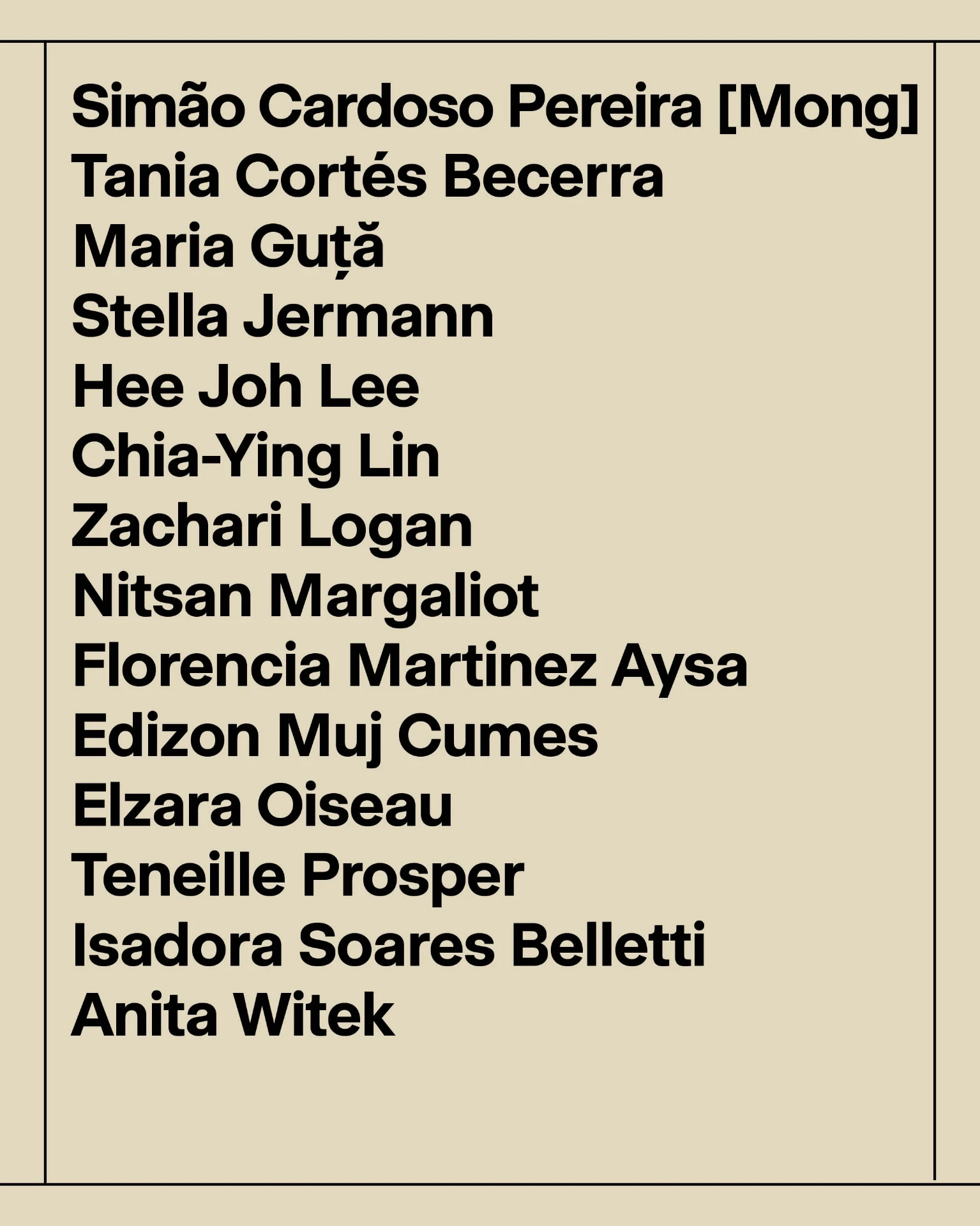
Commissaires invités, des étudiants et étudiantes en cycle Master de Sciences Po Saint-Germain-en-Laye ont conçu trois parcours présentant les recherches de quatorze artistes.
Open Studio curated by Sciences Po Saint-Germain-en-Laye at Cité internationale des arts
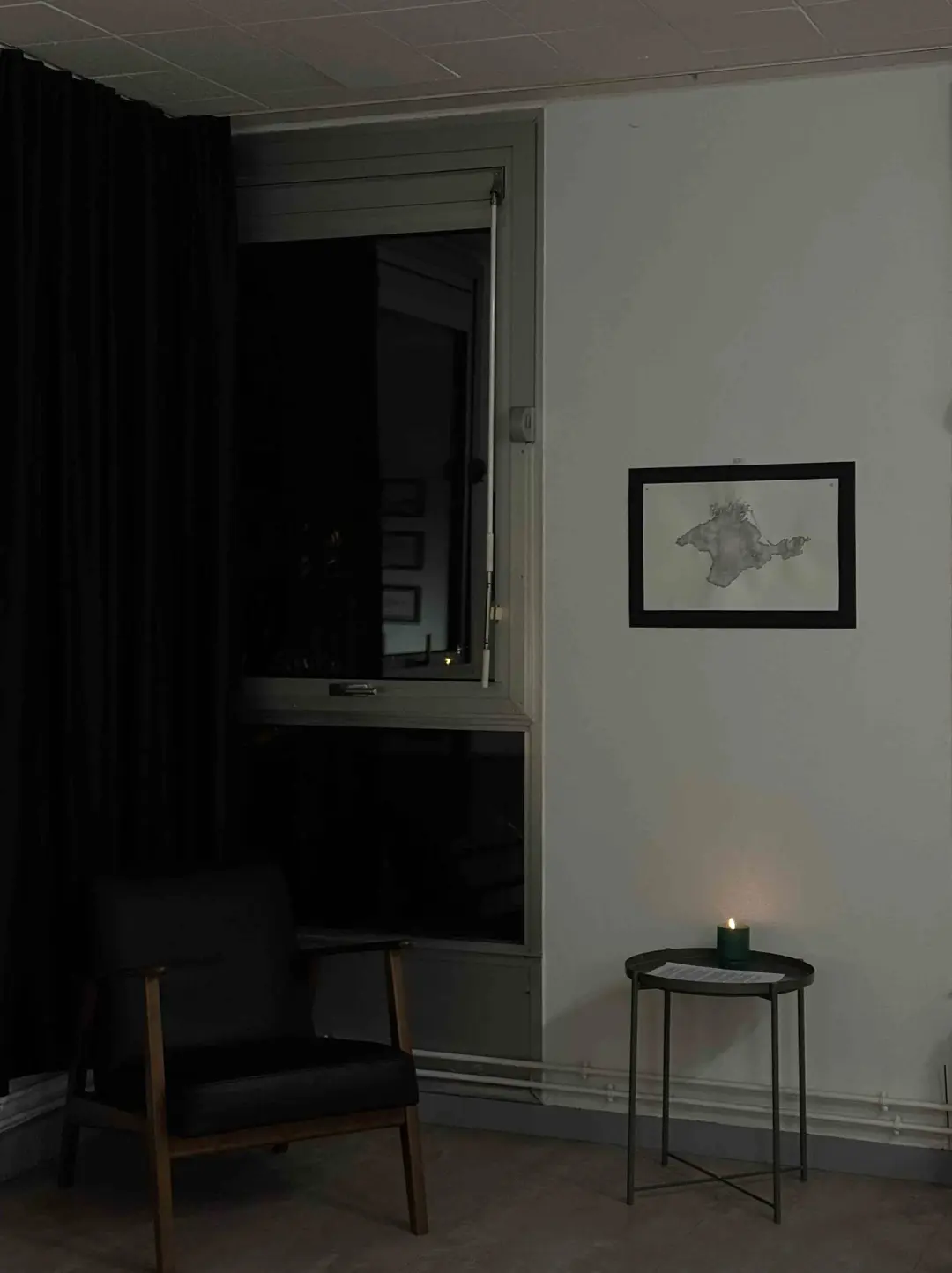
this Open Studio presents part of my ongoing research about the teaching of Crimean Tatar language in the very beginning of the foundation of L’École Spéciale des Langues Orientales Vivantes (today INALCO ) at the end of 18 century in Paris. I will post more about it when I will collect some more information.
Thanks to the team of the students of Sciences Po: Héloïse Landois, Léonore Araujo-Dutartre, Juliette Antunes, Hippolyte Blanc, Perick Berlehner, Lisa Gendrier, Aurélien Delpy, Agathe Salgues, Charlotte Prieur for a great mediation and collaboration
The residency is funded by Cultural Department of Canton Zurich.
More detailed photos of my works will be posted later.
Read description of the project below.
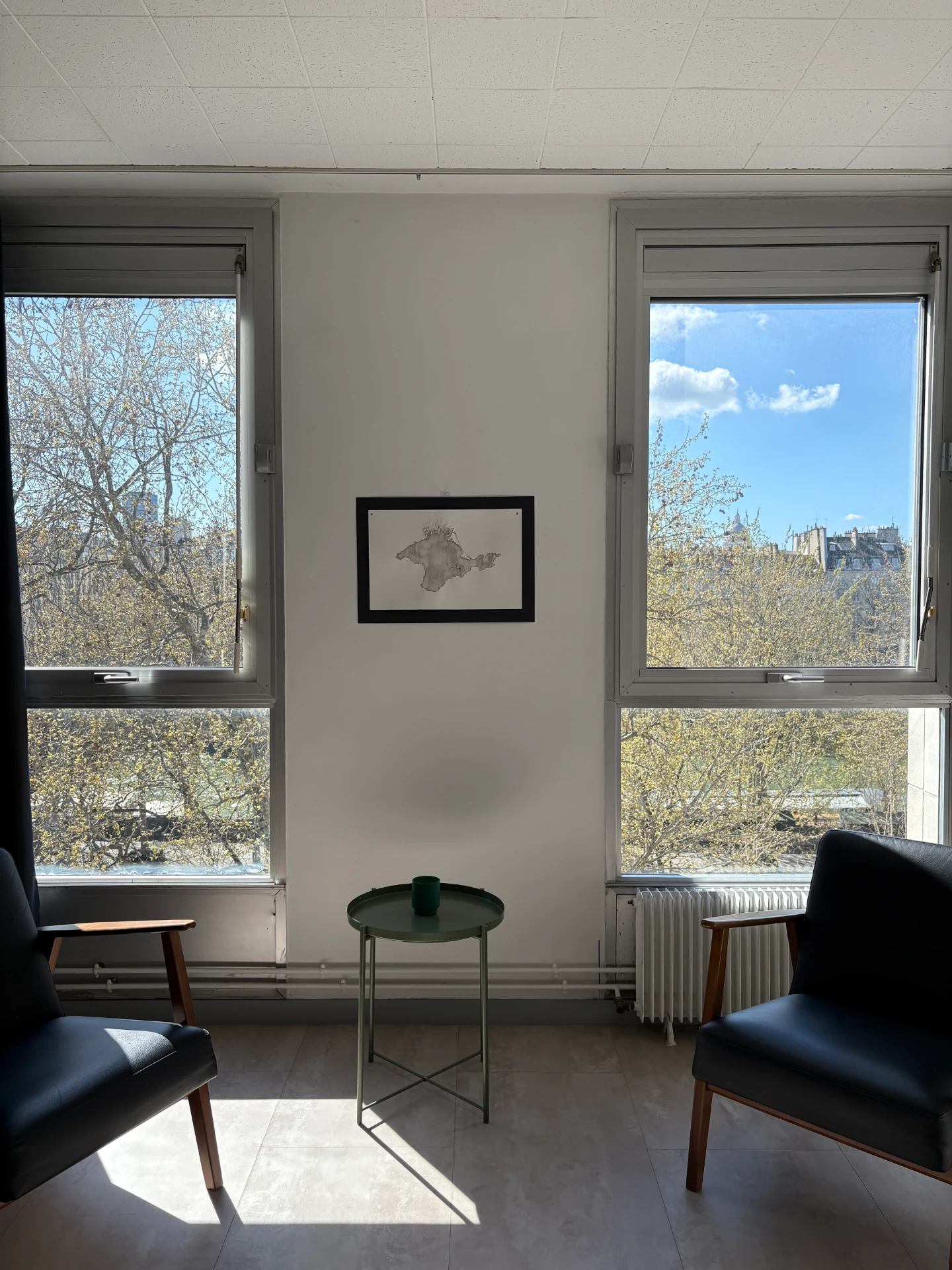
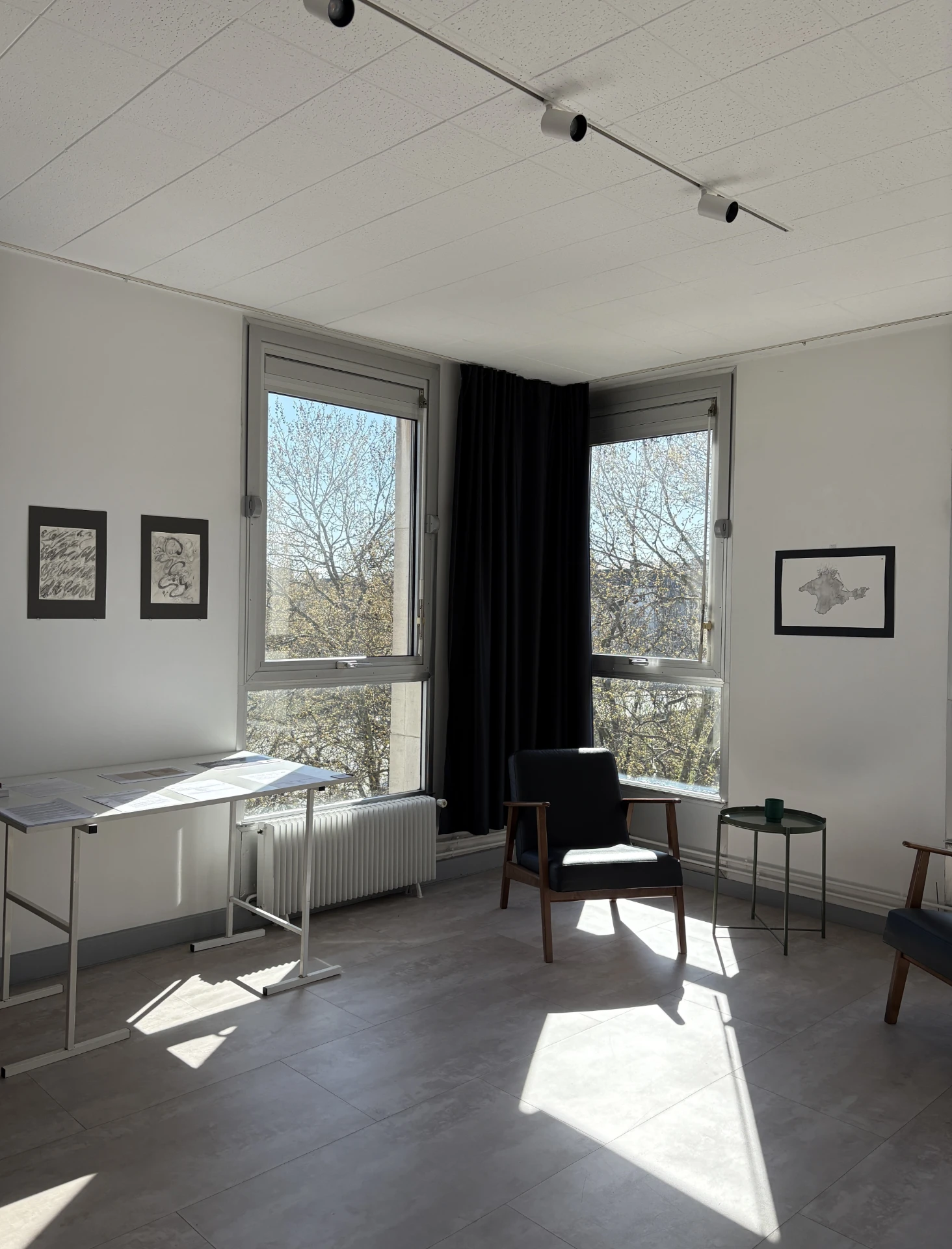
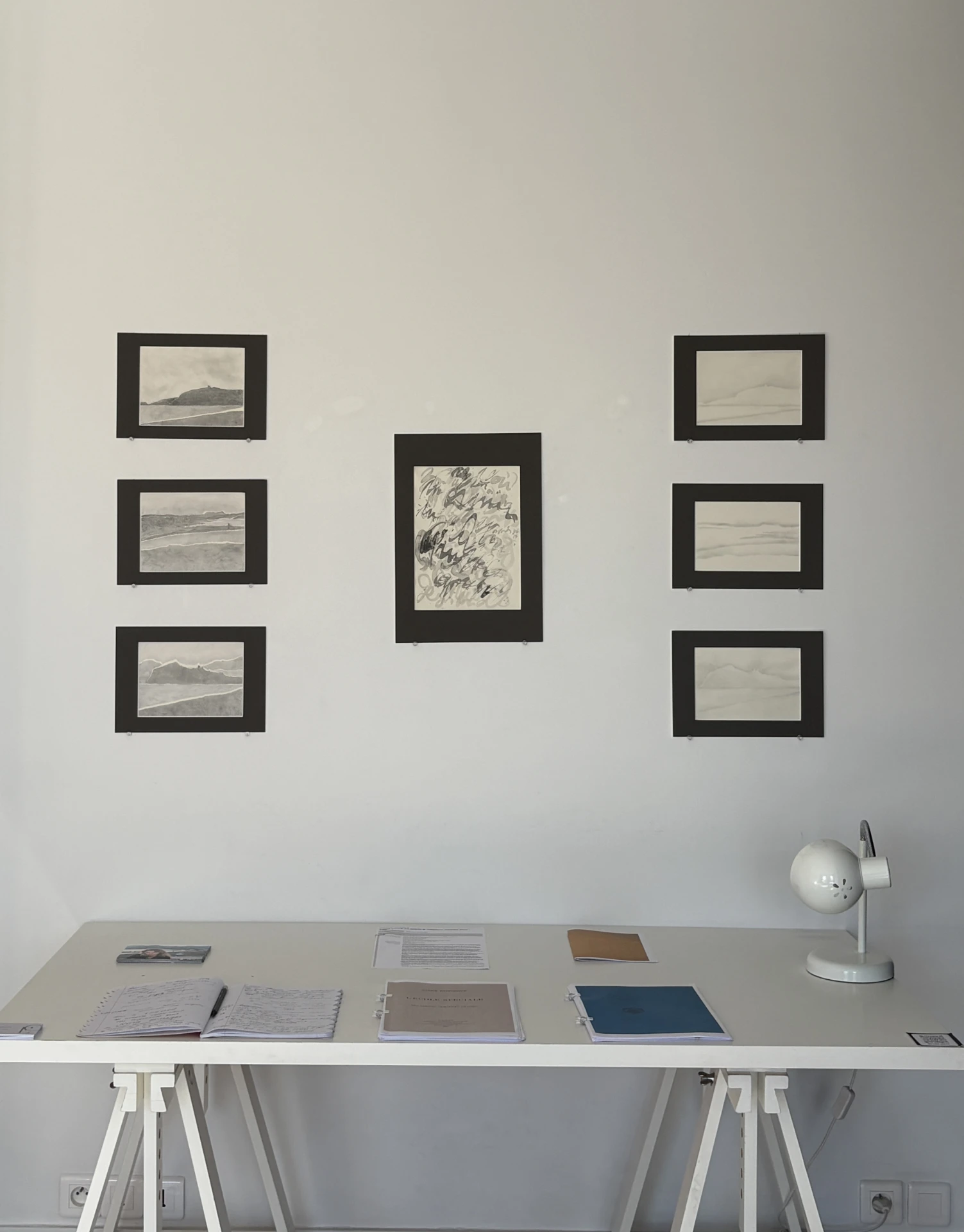
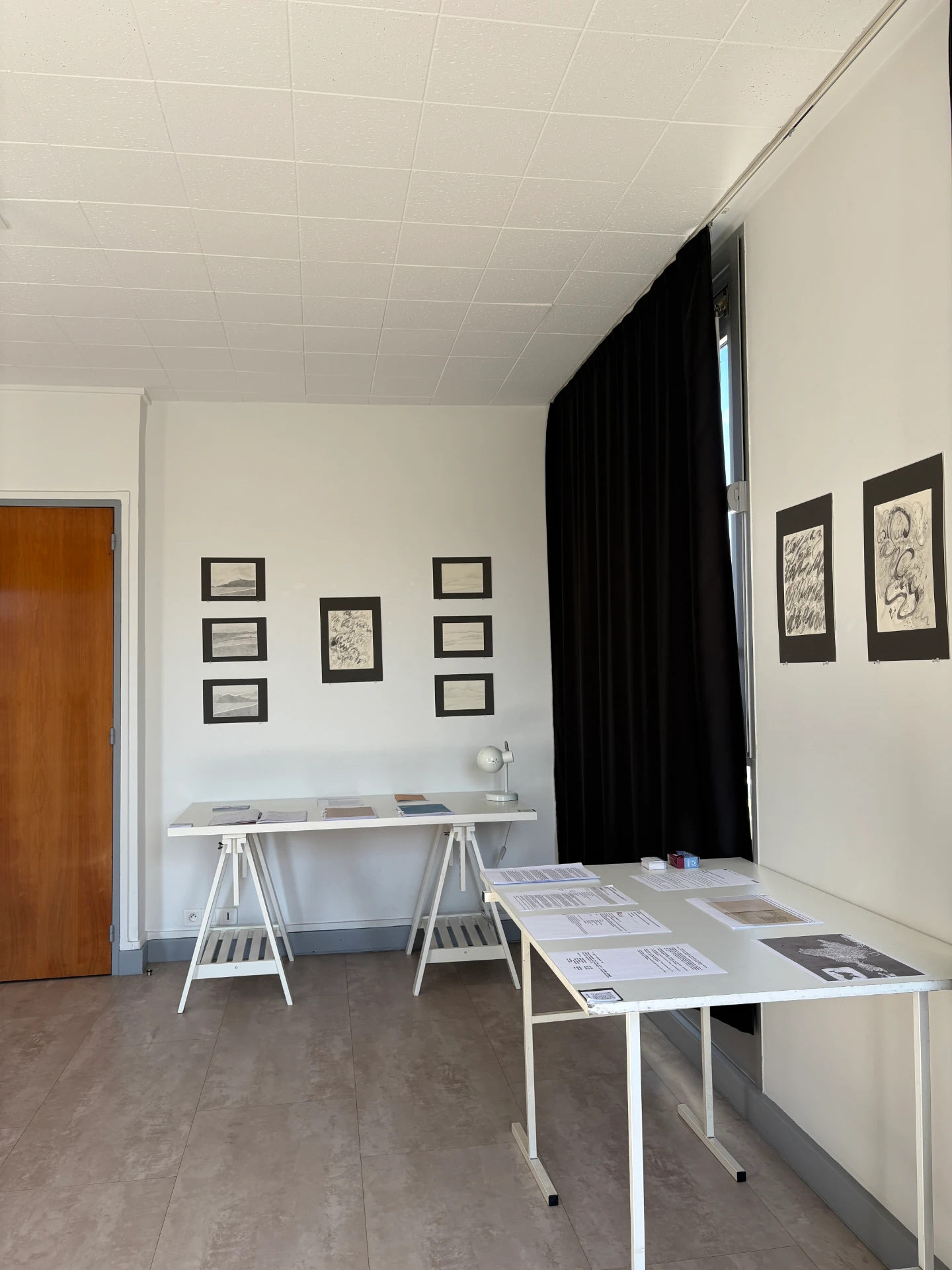
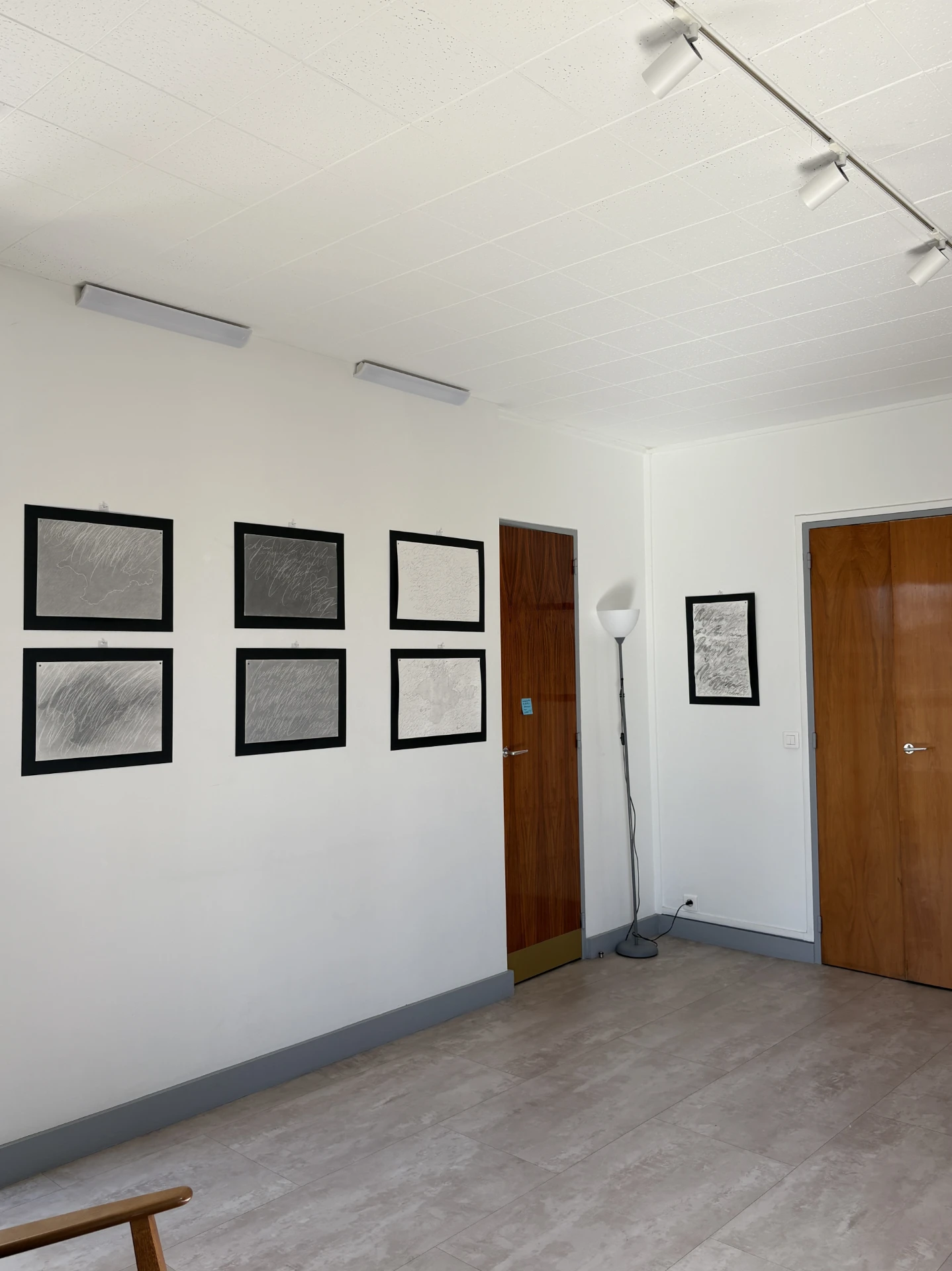
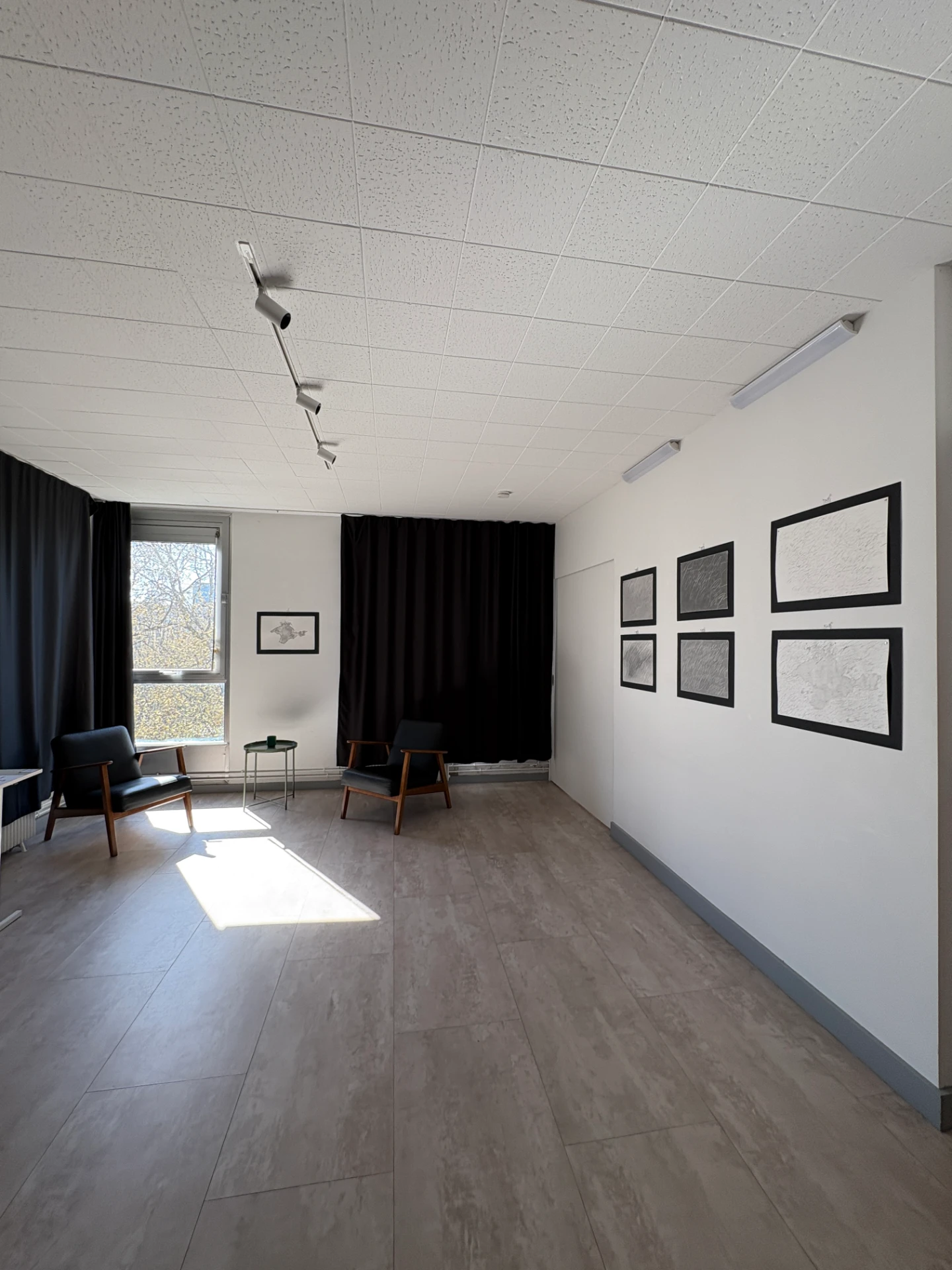
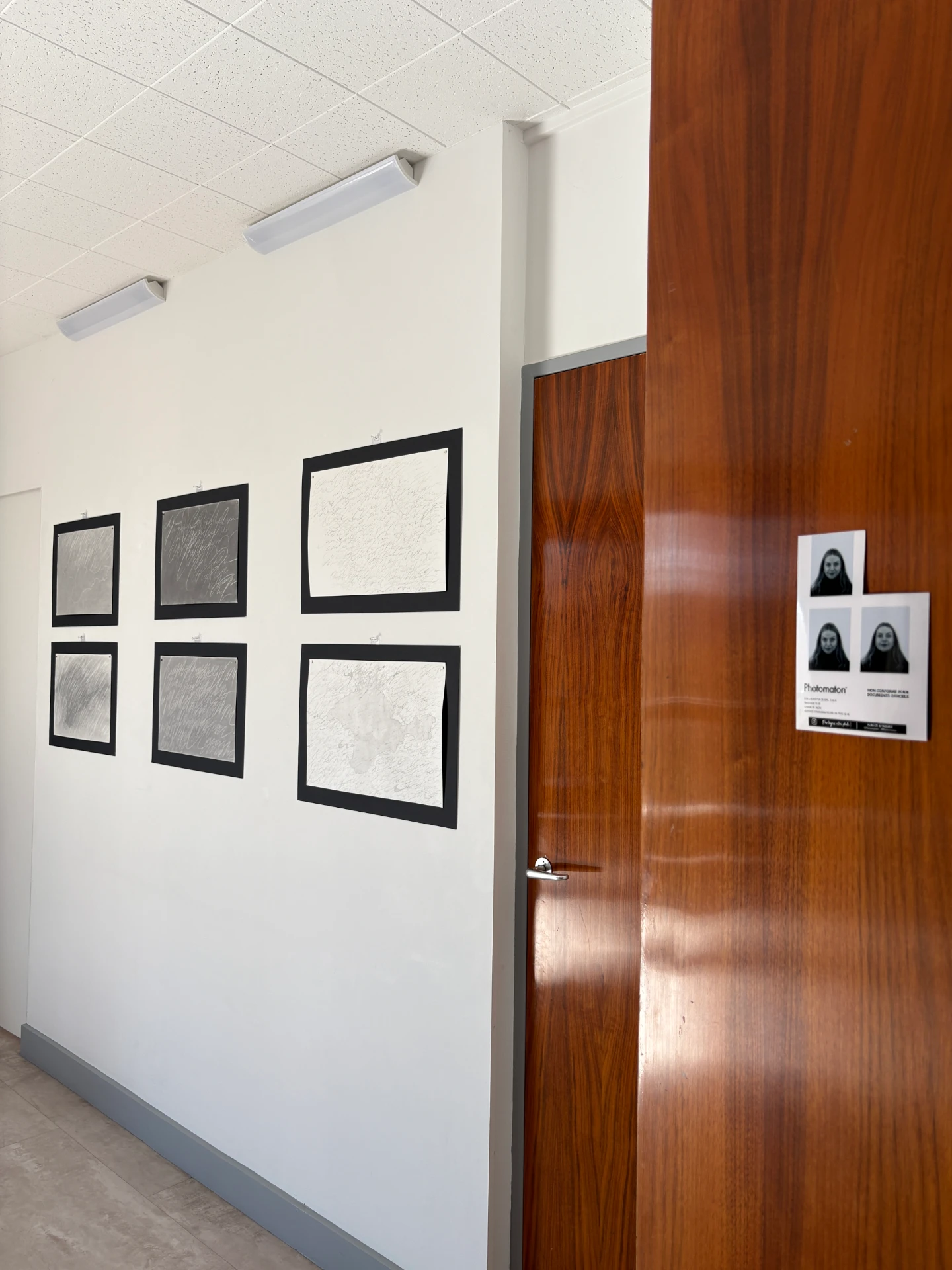
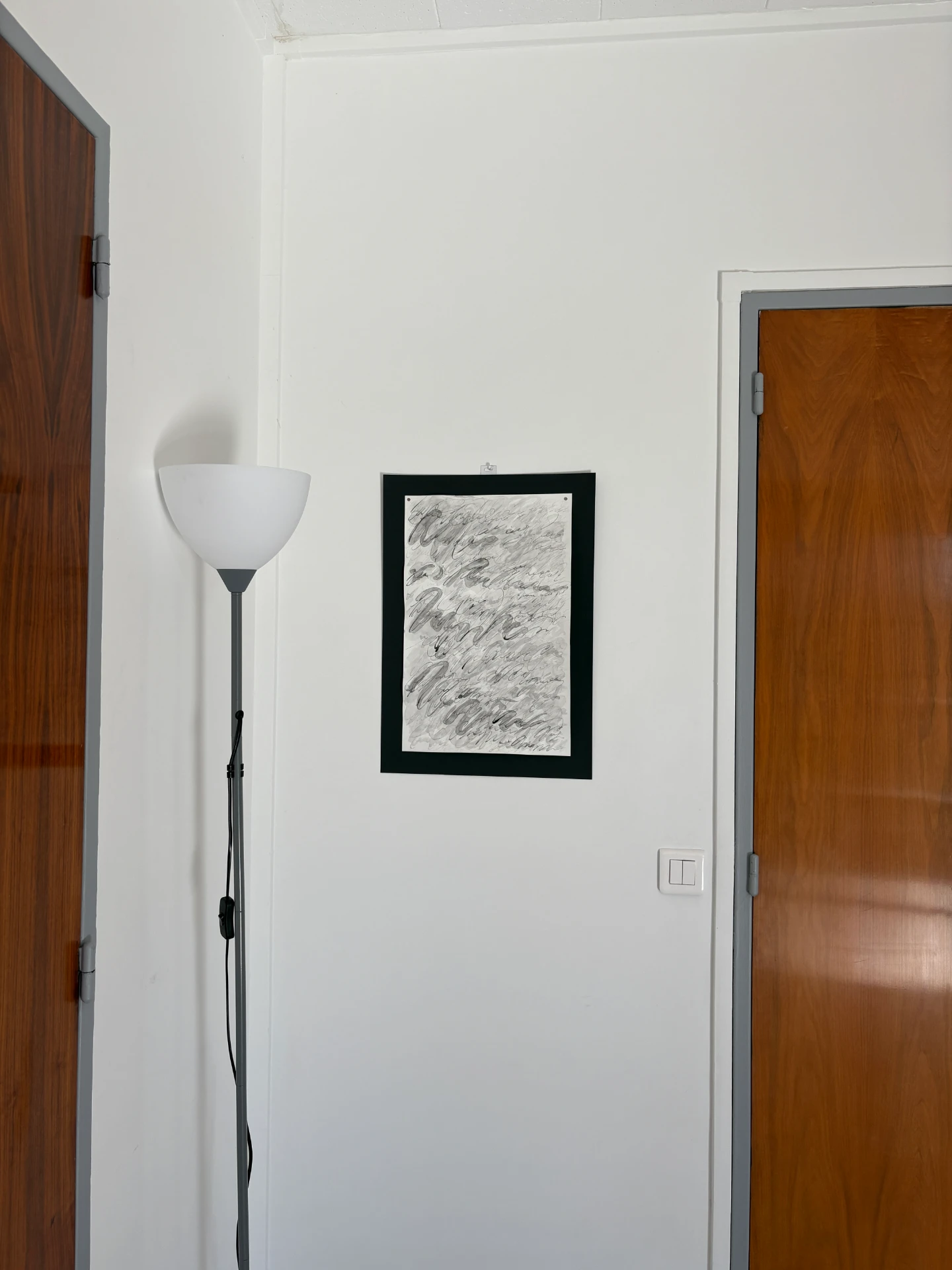
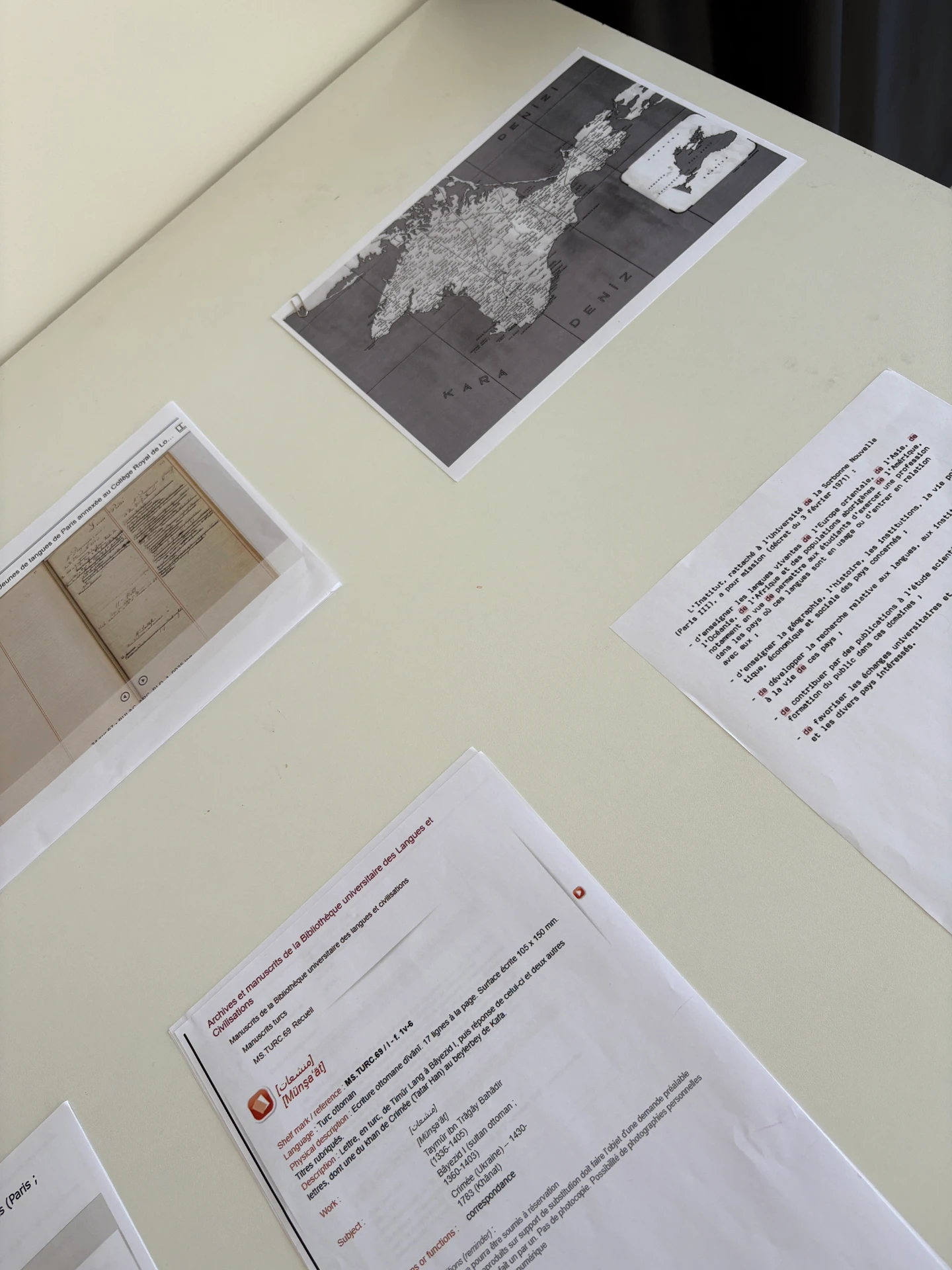
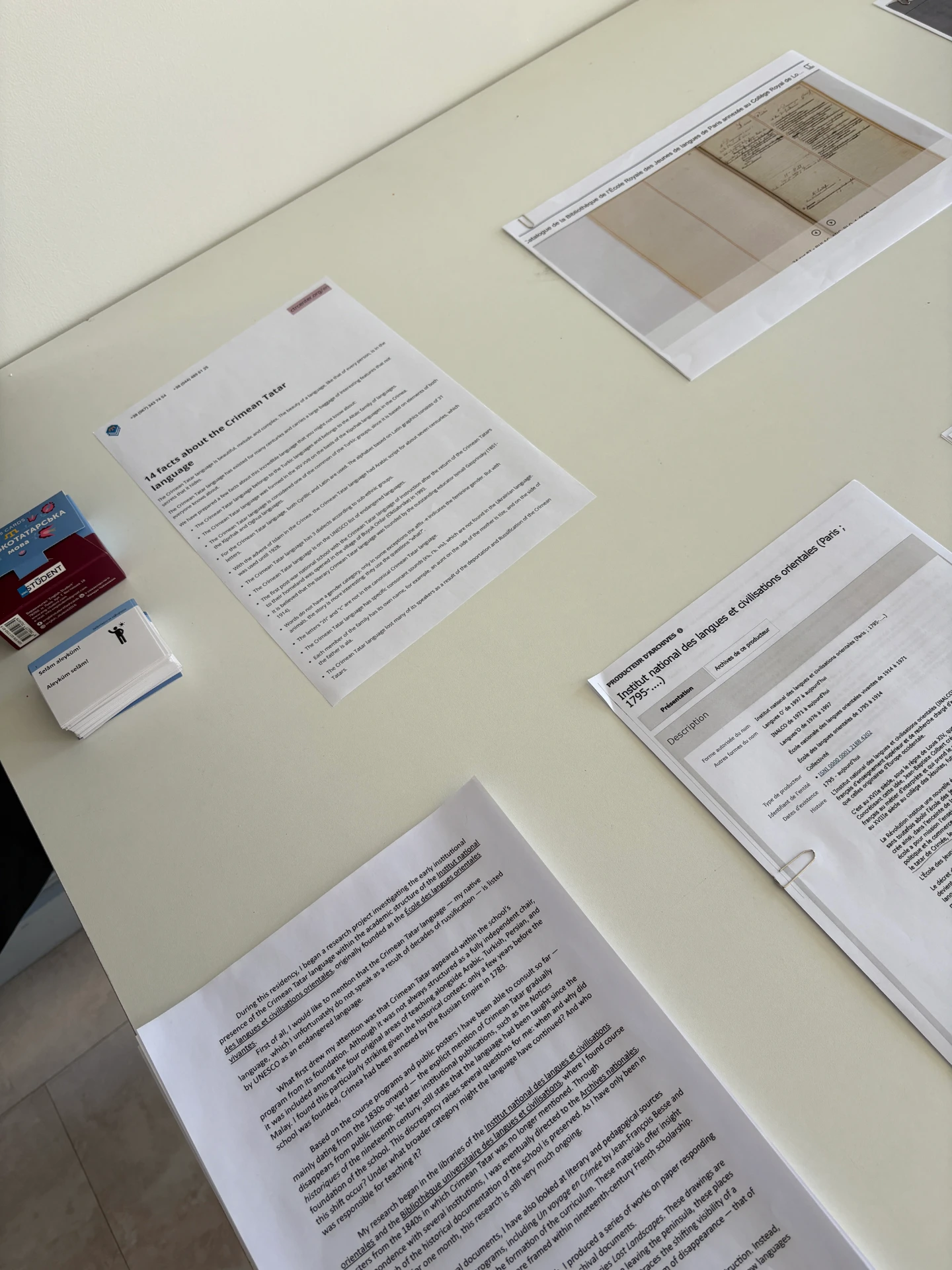
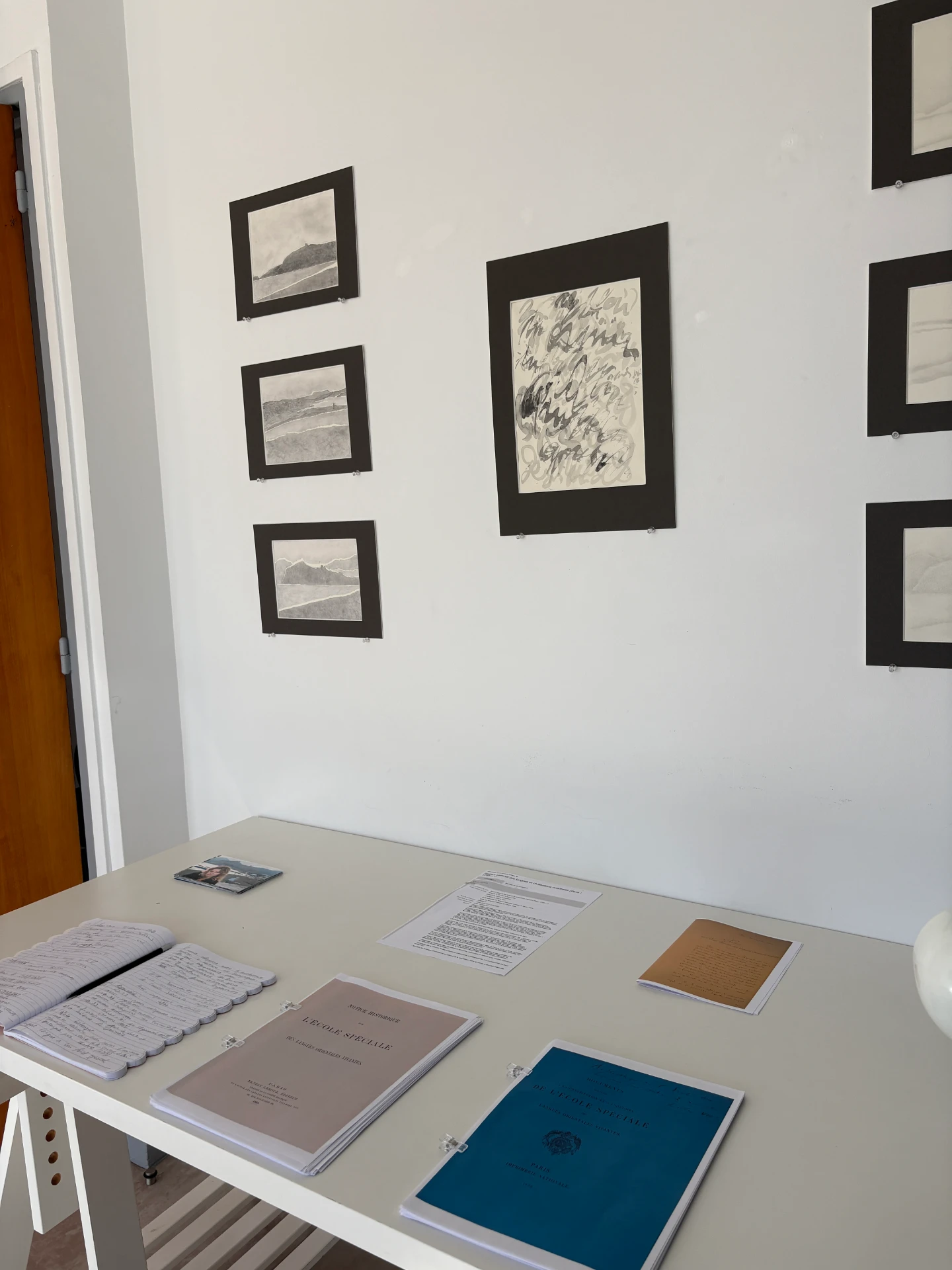
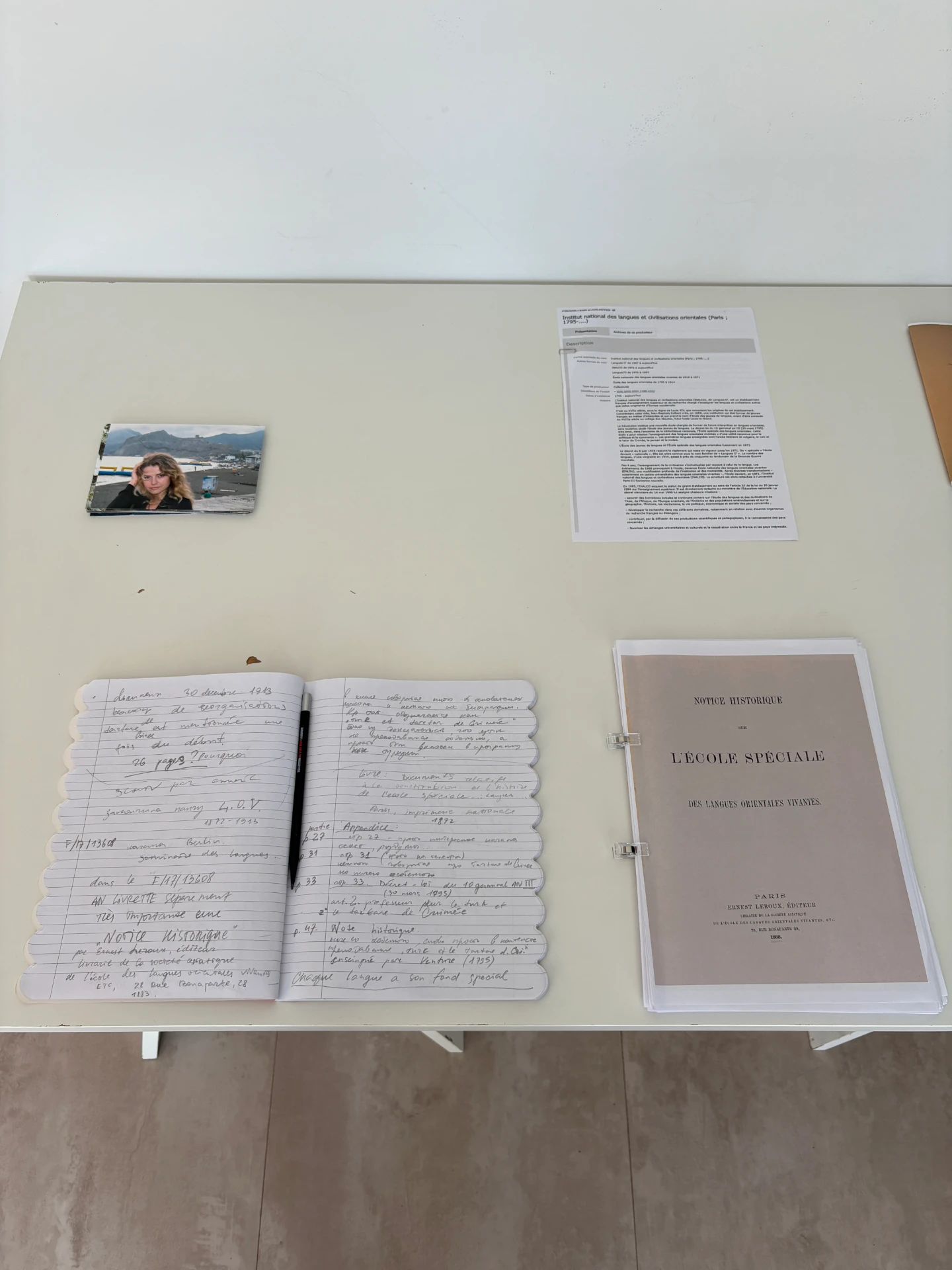
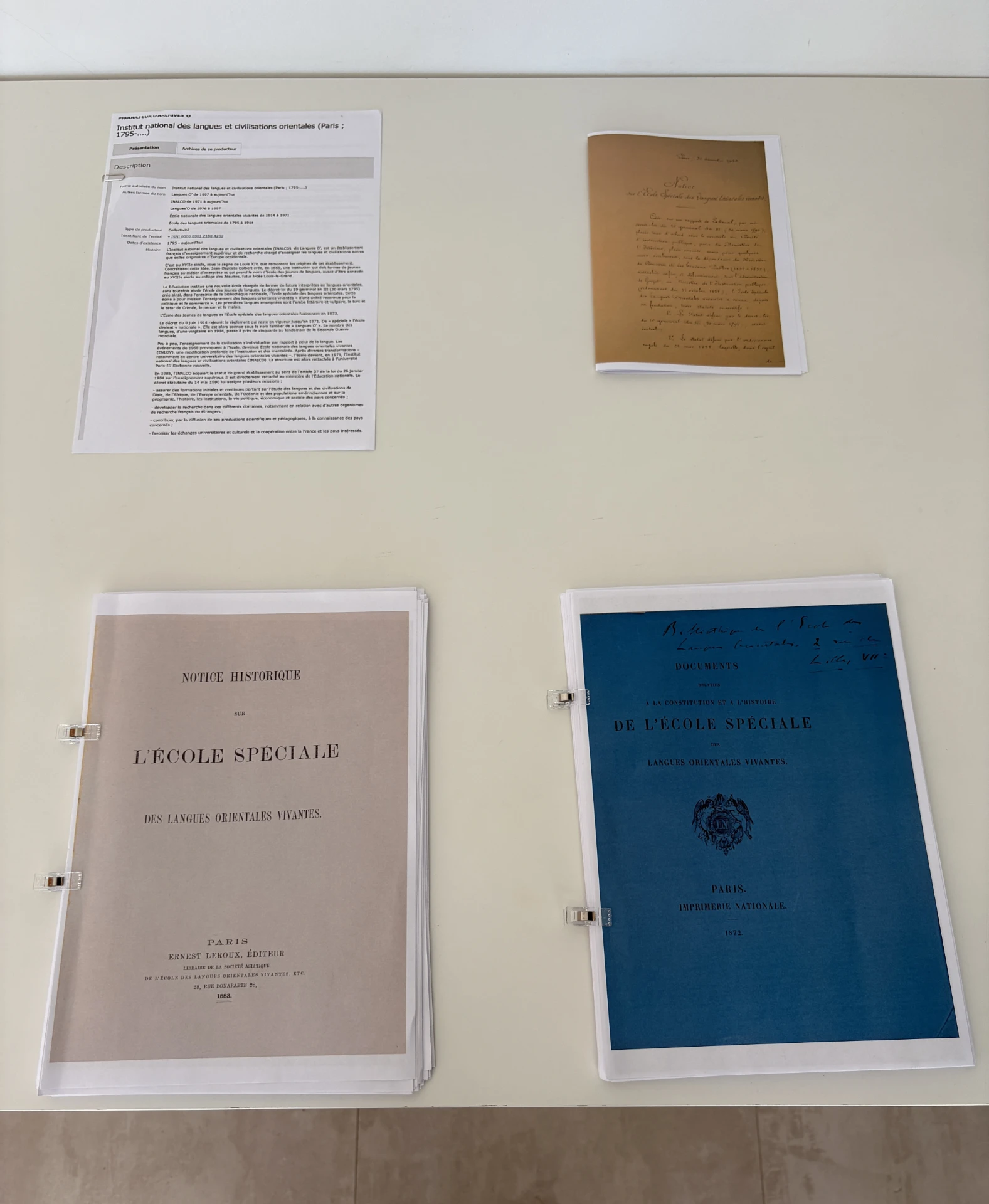
During this residency, I began a research project investigating the early institutional presence of the Crimean Tatar language within the academic structure of the Institut national des langues et civilisations orientales, originally founded as the École des langues orientales vivantes.
First of all, I would like to mention that the Crimean Tatar language — my native language, which I unfortunately do not speak as a result of decades of russification — is listed by UNESCO as an endangered language.
What first drew my attention was that Crimean Tatar appeared within the school’s program from its foundation. Although it was not always structured as a fully independent chair, it was included among the four original areas of teaching alongside Arabic, Turkish, Persian, and Malay. I found this particularly striking given the historical context: only a few years before the school was founded, Crimea had been annexed by the Russian Empire in 1783.
Based on the course programs and public posters I have been able to consult so far — mainly dating from the 1830s onward — the explicit mention of Crimean Tatar gradually disappears from public listings. Yet later institutional publications, such as the Notices historiques of the nineteenth century, still state that the language had been taught since the foundation of the school. This discrepancy raises several questions for me: when and why did this shift occur? Under what broader category might the language have continued? And who was responsible for teaching it?
My research began in the libraries of the Institut national des langues et civilisations orientales and the Bibliothèque universitaire des langues et civilisations, where I found course posters from the 1840s in which Crimean Tatar was no longer mentioned. Through correspondence with several institutions, I was eventually directed to the Archives nationales, where much of the historical documentation of the school is preserved. As I have only been in the residency for one month, this research is still very much ongoing.
Alongside archival documents, I have also looked at literary and pedagogical sources referenced in the teaching programs, including Un voyage en Crimée by Jean-François Besse and other texts that contributed to the formation of the curriculum. These materials offer insight into how Crimea and its language were framed within nineteenth-century French scholarship.
During this first phase of the research, I produced a series of works on paper responding to manuscripts, handwritten annotations, and archival documents.
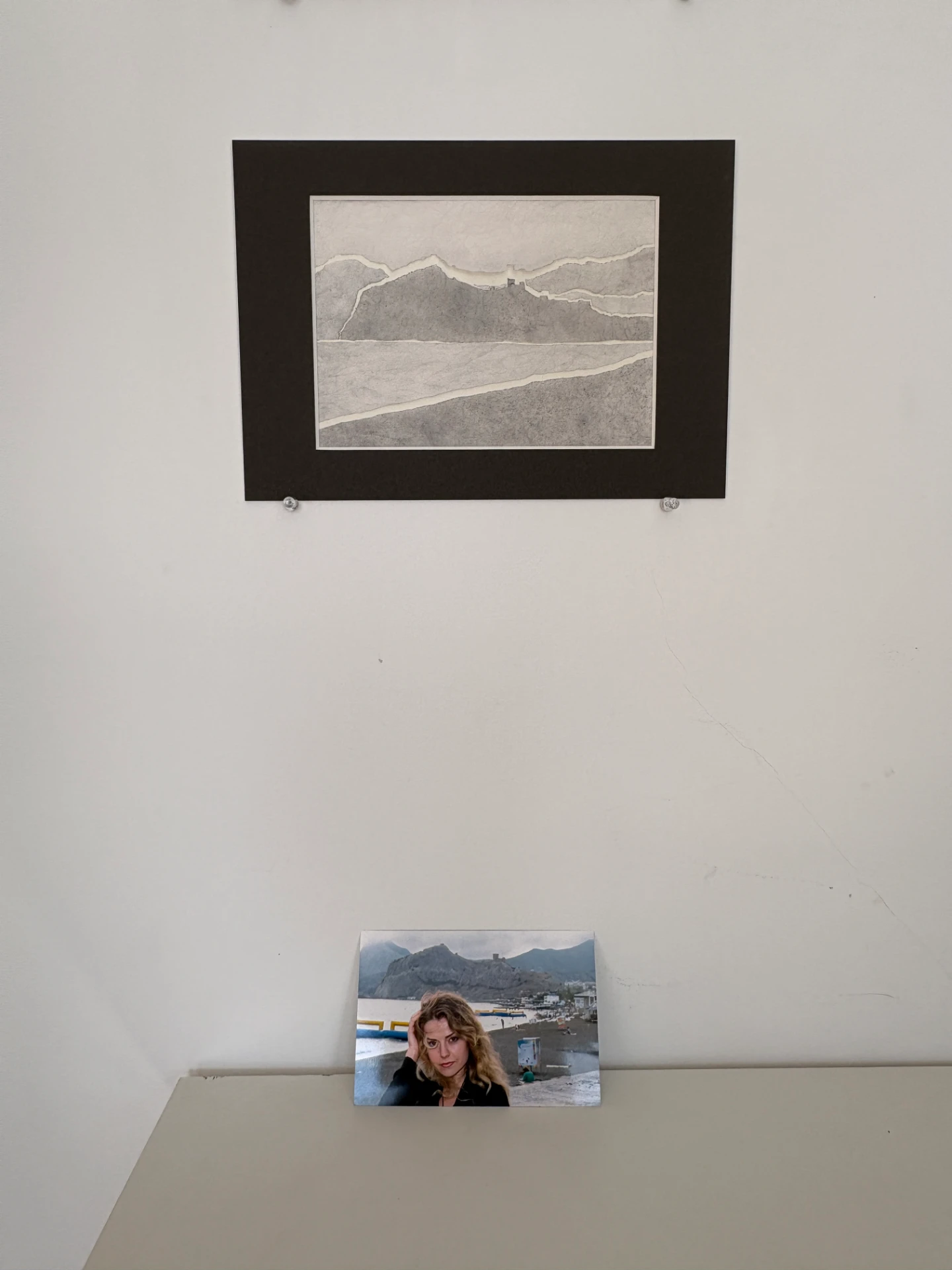
Alongside this research, I also continue my series Lost Landscapes. These drawings are based on photographs I took in Crimea before 2014. Since leaving the peninsula, these places exist primarily through memory. While the archival research traces the shifting visibility of a language within institutions, Lost Landscapes reflects another form of disappearance — that of a landscape gradually receding into memory.
At this stage, I do not attempt to produce a definitive historical reconstruction. Instead, my research follows fragments, inconsistencies, and transformations, observing how languages and places can move from visible presence toward quieter forms of disappearance.